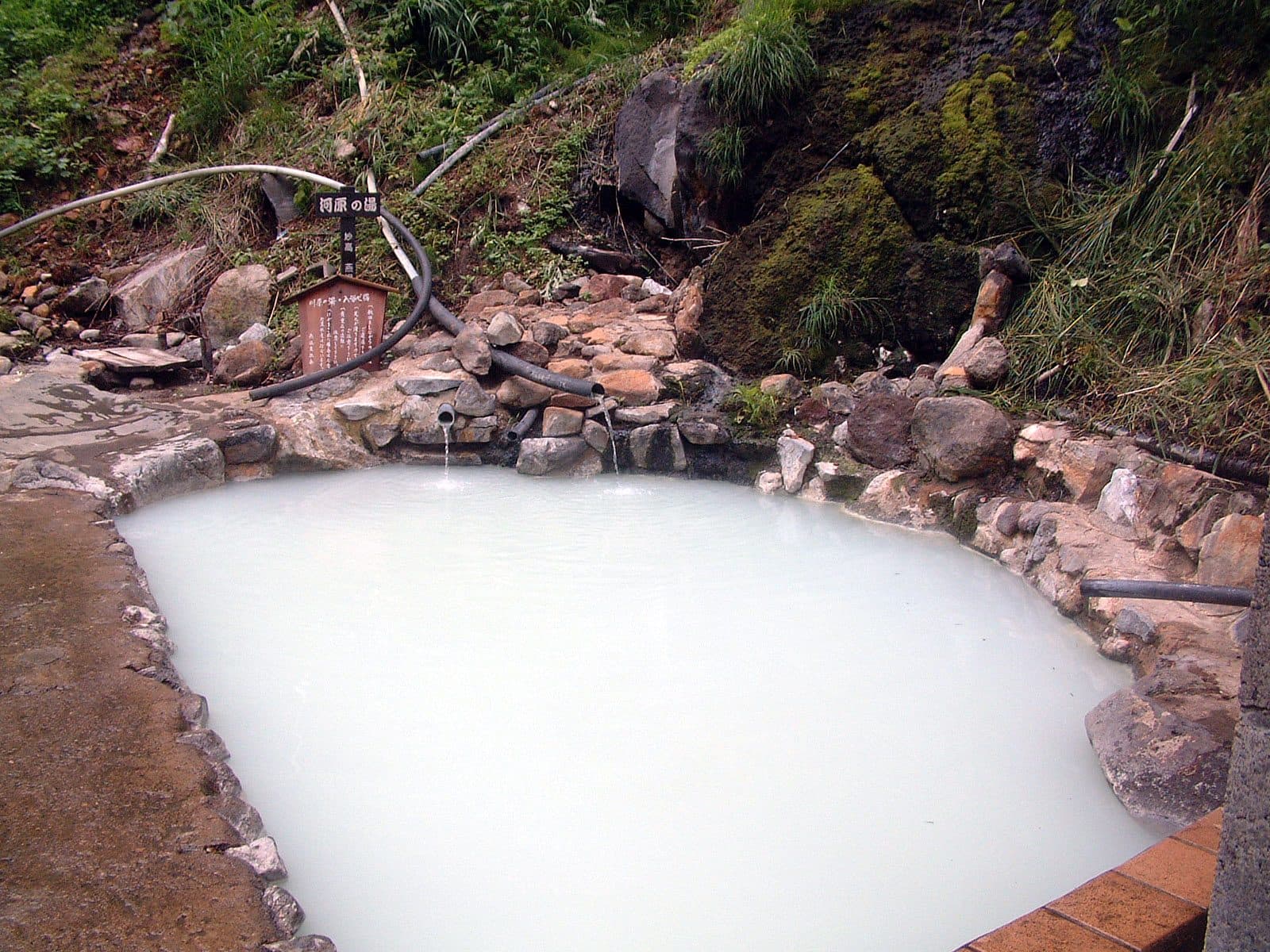
Myoko sits on seven hot-spring villages under Mt Myoko — Akakura, Ikenotaira, Seki, Suginosawa and more. This list is paid public baths and day-use hotel baths you can walk into after skiing, sourced from Myoko Tourism. Fees run roughly ¥400–¥1,100. Hours change — confirm before you go.
It is not a free village bath trail like Nozawa. Taki-no-yu closes all winter. Seki’s outdoor pools often shut for ski season. Plan the soak that is actually open.
Questions people actually ask
- Can I visit a Myoko onsen with tattoos?
- It depends on the facility. Myoko’s paid day-use baths and hotel day baths have individual policies — some allow tattoos, others ask for coverage, some ban them. Check with each place before you go.
- Is Taki-no-yu open in ski season?
- No. Taki-no-yu (滝の湯) is outdoor-only and closed in winter (typically open April–November). For ski weeks use village public baths like Fureai Kaikan or Naena-no-yu, or a hotel day-use bath in Akakura.
- What’s the cheapest public bath near the lifts?
- Fureai Kaikan in Ikenotaira is ¥450 adult (closed Thursday). Naena-no-yu in Suginosawa is ¥500 and open daily in winter. Ooyu near Myokokogen Station is ¥400 (closed Tuesday).
- What do I need to bring?
- Bring a small wash towel and a larger dry towel if you have them — many places sell or rent if you forget. Soap/shampoo varies by facility. Cash is safest. No swimwear — onsens are nude bathing. Tie long hair up.
- Best time for an après soak?
- Best when lifts are done and you have 45–90 minutes before dinner. Skip when you are rushing a reservation or your lodge already has a solid bath.